
Expert ReviewedEvidence Based
10 Reasons Veterinary Researchers Now Recommend Green Lipped Mussel For Hip Dysplasia
Reason #1
What A Loose Hip Is Doing To The Cartilage Right Now

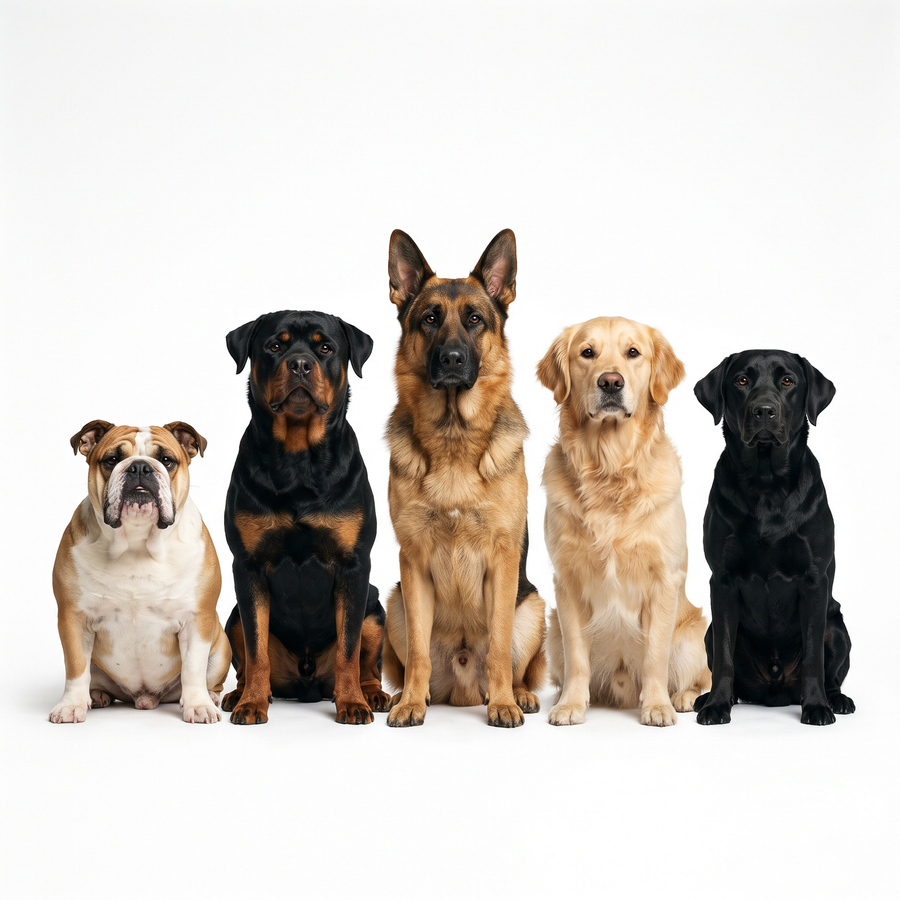
If you live with a German Shepherd, Golden Retriever, Labrador, Rottweiler, French Bulldog or English Bulldog, there is a real chance the hip joints never formed quite right.
You may already have seen it without naming it. Stiffness first thing in the morning. A rise that used to be instant and now takes three attempts. A pause at the bottom of the stairs. Back legs that don't look as solid as they did last year. Or the look at the sofa, and the turning away, because the jump isn't worth it any more.
What almost nobody explains is what is actually happening inside that joint.
A hip is a ball and socket. In dysplasia the socket is too shallow and the ball sits loose inside it. So the surfaces don't glide — they grind. Every single step.
That grinding wears away cartilage, and cartilage is the only thing standing between bone and bone.
Here is the part that matters. Cartilage does not grow back. What is gone is gone. But what is left can be protected, and that is entirely down to what happens next.
The hip is a ball-and-socket joint, and the ball is meant to sit snugly inside the socket. In dysplasia the socket is too shallow, so the joint is loose. Dogs are born with the predisposition and the hips begin forming badly during growth, sometimes as early as five months. That loose fit is what causes the grinding, and the grinding is what destroys cartilage over time.
Published OFA screening data puts English and French Bulldogs highest by a wide margin — roughly seven in ten dogs evaluated show dysplastic hips. German Shepherds, Golden Retrievers and Rottweilers sit around one in five, and Labradors above one in ten. It can appear in any breed, and when both parents carry the trait a large majority of the litter is affected.
Yes, and that is the uncomfortable part. The joint forms badly during growth, long before there is anything to see. Plenty of dogs are radiographically dysplastic at a year old and completely symptom-free. The absence of a limp is not the absence of damage.
Reason #2
Every Step Costs More Than You Think

A loose hip does not only damage itself. It damages everything around it.
When one side hurts, your dog quietly shifts weight off it. The spine takes the strain. The knees take the extra load. The muscle over the sore hip wastes, because it is being used less.
Less muscle means less support. Less support means more grinding. More grinding means less cartilage. The cycle feeds itself, and every step drives it one notch further.
You watch it in slow motion. The walks get shorter. The stairs become a negotiation. The dog who used to be twenty feet ahead of you now watches you leave from the floor — and you can see in their face that they are trying.
Then comes the appointment you have been putting off, and the sentence you were not ready for: hip replacement, around $7,000 a side, most dogs need both, no guarantee attached. Doing the maths in an exam room while trying not to cry.
That is where unmanaged dysplasia goes. Not overnight — one step at a time. Which is also the reason it can be slowed.
No. Dogs compensating for a sore hip end up with problems in the lower back, the knees and sometimes the elbows. The whole body reorganises itself around one painful joint, which is why owners often describe a dog that seems to be falling apart everywhere at once.
The cartilage keeps wearing, the muscle keeps wasting, the pain climbs and the options narrow. Owners who wait longest are the ones who end up facing a five-figure surgical decision that earlier management might have delayed or avoided.
Intermittent limping is one of the earliest signs there is. The good days are days your dog is compensating well, not days the joint is fine. If there is a limp at all, even occasionally, this is the moment that is worth acting on.
Reason #3
What The Research Says About What You've Already Tried

If your dog has been diagnosed, you have almost certainly bought or seriously considered glucosamine chews, fish oil, turmeric or CBD.
You were doing the right thing. Here is what the evidence actually says.
In 2022 the CARE systematic review pooled 72 clinical trials across every major supplement category — the largest analysis of its kind in veterinary medicine.
- Glucosamine chews — no measurable effect in 88.9% of trials. Nine dogs in ten showed nothing.
- Turmeric — some human evidence, very little canine, and absorption that is worse again than glucosamine.
- CBD — may dull pain perception, but it does nothing for the cartilage being ground away inside the socket.
- Fish oil — genuinely useful for general inflammation, but missing ETA, the omega-3 that blocks the second inflammatory pathway.
- Whole-food marine omega-3s — the one category where nearly every trial showed real improvement in pain, mobility and inflammation.
Green Lipped Mussel is the only natural source that carries omega-3s, glucosamine and chondroitin together, in a whole food a dog's body actually absorbs.
A 2022 systematic review that pooled 72 clinical trials across nine supplement categories and thousands of dogs. Its headline conclusion was that glucosamine should no longer be the default recommendation, and that ocean-source omega-3s were the one category with consistent positive results.
Two reasons, and neither is about cartilage. A typical chew carries ten to fifteen ingredients, with 60 to 80% of the treat given over to fillers and binders. And only around 12% of synthetic glucosamine is absorbed — the rest passes straight through. A little of everything, enough of nothing.
Yes. The Hielm-Björkman trial followed dogs diagnosed with hip dysplasia and found the group receiving Green Lipped Mussel needed measurably less pain medication and moved better within the first eight weeks. Glucosamine showed no equivalent benefit in the same body of research.
Reason #4
It Feeds The Joint And Shields What Cartilage Is Left

A deteriorating hip needs three things. Less inflammation, so the cartilage stops being chewed up and the pain comes down. Cartilage nutrition, so what remains stays strong. Moisture in the joint, so the ball is cushioned inside the socket instead of hammering it.
Most supplements attempt one of the three. Green Lipped Mussel does all three, naturally, in a single ingredient.
Its natural glucosamine arrives inside the mussel's whole-food matrix rather than isolated in a lab. This is not the same glucosamine that failed in Reason 3 — whole-food glucosamine is absorbed far better than the synthetic version packed into chews.
Its chondroitin helps the joint hold onto moisture, and that moisture is the cushion between ball and socket. A joint that dries out is a joint taking bone-on-bone impact with every step.
Its omega-3s damp down the chronic inflammation that breaks cartilage apart — including ETA, a rare omega-3 found almost nowhere else, which acts on both of the body's inflammatory pathways rather than only one.
A dysplastic hip is chronically inflamed, and that inflammation runs down two separate biochemical routes — think of it as two fires burning at once. Most omega-3s put out one and leave the other going, which is part of why dogs stay sore on a supplement that should be helping. ETA acts on both, which is what sets Green Lipped Mussel apart from ordinary fish oil.
Every step your dog takes grinds the joint and costs a little more cartilage. Bringing the inflammation down makes that grinding less destructive, while the glucosamine and chondroitin give the remaining cartilage what it needs to stay strong and cushioned. In practice that shows up as less pain getting up, more willingness to walk, and better mornings.
Both, and that matters more than it sounds. Most dysplastic dogs have it bilaterally even when only one side is symptomatic, and the good hip is carrying extra load precisely because the other one hurts. Nutrition reaches every joint in the body at once; surgery reaches one.
Reason #5
Weeks, Not Months — And The Studies Back It

Most joint supplements ask for ninety days before you judge them, because synthetic glucosamine barely absorbs and nothing accumulates. Green Lipped Mussel runs on a different clock, and there is trial data behind that.
The Hielm-Björkman study, published in Evidence-Based Complementary and Alternative Medicine, followed dogs with diagnosed hip dysplasia and found they needed significantly less pain medication, with measurable mobility gains over eight weeks.
The Kampa study, published in Frontiers in Veterinary Science in 2024, tested 101 dogs with hip joint damage against prescription anti-inflammatories and found significant improvement in pain and mobility within six weeks.
What that tends to look like at home:
- Week 1 to 2 — the stiffness eases. The morning rise is a little less laboured. Easy to miss unless you are watching.
- Week 3 to 4 — getting up without the slow rocking motion that breaks your heart every morning. Walking with more conviction. Less limping after a nap.
- Week 6 to 8 — attempting the stairs they had written off. Getting on the sofa unaided. Meeting you at the door again.
The omega-3s in Green Lipped Mussel are bound to phospholipids — the same material your dog's own cell membranes are built from — so they absorb directly into tissue. Fish oil's fats are bound to triglycerides, which have to be processed first. Fewer steps, less lost on the way.
Often the most, and the reason is straightforward: severe cases carry the most inflammation, and inflammation is what this brings down hardest. It cannot deepen a shallow socket or replace cartilage that has already gone, but owners of the worst-affected dogs frequently report the most obvious change.
That is the expected result rather than bad luck — 88.9% of dogs in the trials showed no improvement on it. Moving to Green Lipped Mussel is not trying another supplement of the same kind. It is changing category.
Reason #6
Your Dog's Hips Are Not Past Saving. Not Yet.

You have watched them slow down. You have seen the struggle every morning. And somewhere in the back of your mind you have been wondering whether you left it too long.
Shorter walks. A ramp by the sofa. A supplement that never quite did anything. Weight kept down, because every extra pound presses through a joint that is already grinding.
All of it helps. All of it reduces the load on the hip from the outside.
But none of it can do the one remaining thing: protect the cartilage from the inside. No ramp rebuilds cartilage. No painkiller stops the grinding. No amount of rest feeds tissue that is wearing away with every step.
That is the gap. Daily cartilage nutrition and anti-inflammatory support from within — which doesn't replace what you are already doing, it finishes it.
Puppy in an at-risk breed, freshly diagnosed, five years into managing it, or recovering from surgery: the stage changes the goal, not the requirement. Every day, that cartilage is either being protected or being ground away. There is no pause button. But there is still cartilage left to save.
Yes, and it is the best moment there is. In a predisposed breed the cartilage is at risk from the day the joint starts forming. Starting before symptoms means protecting cartilage that is still fully intact rather than trying to hold on to what is left.
Yes. It is a food, not a drug, and it sits alongside pain medication, anti-inflammatories and steroids without conflict. Some owners find that over time, with their vet's agreement, doses can come down. Never adjust a prescription without your vet.
It works at every age, just for different reasons. Younger dogs have more cartilage worth protecting; older dogs have more inflammation worth reducing. Both benefit, and the best day to start is whichever one you are on.
Reason #7
Gentle On The Gut, Easy On The Organs

Most joint supplements upset stomachs. Not occasionally — it is the single most common complaint across thousands of reviews. The fillers and binders holding a chew together are hard work for a gut, and it is the packaging around the ingredient causing it, not the ingredient.
And a dog already on carprofen, meloxicam, gabapentin or prednisone has a stomach that is more fragile than usual and a liver that is already busy. The last thing that dog needs is a supplement that makes them sick.
Pure powder gives the body nothing to argue with. No binders, no preservatives, no mystery ingredients — one natural food, dissolved into whatever they already eat. No liver strain, no kidney stress, no bloodwork required.
Most supplement stomach upset traces back to the fillers and binders in chews rather than the active ingredient. A pure powder has none of them and dissolves into any food. Dogs with sensitive stomachs generally handle it without issue.
It smells like the sea, which dogs tend to approve of, and it disappears into kibble, wet food or raw. Most dogs never notice it. Some start watching for the tub.
Reason #8
How It Compares To Everything Else On The Table

You have options. They are not doing the same job. Some mask pain. Some reduce swelling for a while. Some fix one hip. Only one feeds and protects both joints, every day.
Glucosamine chews — no effect in 88.9% of trials, roughly 12% absorbed, and mostly filler by weight.
Prescription anti-inflammatories — real short-term pain relief, but dysplasia means daily use for life, with liver, kidney and stomach risk and bloodwork every six months. They manage pain; they do not protect cartilage.
FHO surgery — removes the head of the femur entirely and asks your dog to relearn walking on scar tissue. Roughly $1,200 to $2,500 a side.
Total hip replacement — major surgery, around twelve weeks of recovery per hip, and a real complication rate covering infection, implant failure and nerve damage. Roughly $3,500 to $7,000 a side, and up to $14,000 for both.
Green Lipped Mussel powder — feeds cartilage, fights inflammation and supports both joints from about $0.49 a day, with no bloodwork and no ceiling on how long you can use it.
Because it works on three levels at once. It calms the inflammation destroying the cartilage, it feeds the cartilage that is left, and it helps the joint hold onto the moisture that cushions it. Most of the other options do exactly one of those three.
Because everything that makes a chew expensive is something your dog does not need. Binders to hold a shape, flavourings to mask taste, a process to bake it, packaging built to look premium. Strip all of that out and what is left is one ingredient in one tub — cheaper to make, and more of it reaching the joint.
No, and it should not be asked to. It is not an acute painkiller. It is daily support that sits alongside medical care, and many owners find doses can come down over time with their vet's guidance. Add it to the plan; don't remove the plan.
Reason #9
Hip Dysplasia Does Not Stop On Its Own

This is the part most owners would rather not read.
A dog diagnosed with mild dysplasia at two or three will typically show moderate to severe joint damage by five or six without daily management. The stiffness that started in the morning spreads across the day. The limp that came and went stops going. The hind legs that looked a little weak stop holding weight.
By seven or eight, plenty of unmanaged dogs cannot get up without help. And that is usually when the surgery conversation happens — thousands of pounds a side, months of recovery, a dog relearning how to walk, no guarantee. Almost everyone who ends up in that chair says the same sentence afterwards.
I wish I had started sooner.
This is not a slow decline over a decade. For most affected breeds the window from a little stiff to can barely move is three to five years without intervention. Dysplasia does not pause and it does not wait for you to decide. Every month without protection is a month of cartilage gone for good.
That is the entire point of it. The timeline above is what happens when nothing is done. Dogs kept on daily anti-inflammatory and cartilage support tend to stay mobile and comfortable for longer — which, for a condition you cannot cure, is the outcome worth buying.
More than ever. Surgery addresses the joint that failed. The other hip is made of the same cartilage, is usually dysplastic too, and has been carrying extra load throughout. Support matters most for the joint that has not failed yet.
Reason #10
One Scoop A Day. That's The Whole Routine.

After the vet visits, the x-rays, the diagnosis and the supplements that promised everything and changed nothing, protecting your dog's hips should not be one more complicated thing.
It isn't. One scoop, on their food, every morning.
No pills to crush. No chew to spit out. No wrestling a dog who is already sore. The powder dissolves into kibble, wet food or raw in about five seconds, and every milligram of it is Green Lipped Mussel. No filler, no artificial flavour.
Most owners in this position are running three to five separate bottles — glucosamine in one, fish oil in another, a chew from the vet, maybe turmeric or CBD on top — and spending $75 to $150 a month doing it. One scoop covers what all of those are reaching for. Omega-3s including ETA for inflammation. Natural glucosamine and chondroitin for cartilage. Natural compounds for joint hydration.
My Honest Recommendation
For years I told owners of dysplastic dogs the same three things. Keep the weight off, keep the exercise controlled, and reach for painkillers when the pain gets bad enough. I watched them work through one glucosamine chew after another while the joint carried on deteriorating, and I assumed there was nothing better to offer.
What changed my mind was a client who brought a tub of pure Green Lipped Mussel powder into my consulting room. Her German Shepherd was severely dysplastic in both hips, struggled to stand, and could barely make the end of the driveway. Three different chews had done nothing. Four weeks in, he was getting up without the rocking. By six he was meeting her at the door.
So I went and read the CARE review and the Hielm-Björkman trial properly, and I looked at what was actually in that tub compared with what I had been recommending for years. One ingredient. No filler. The things the research said should matter.
I recommend Lucky Tails specifically because it delivers the ingredient at the strength the research actually used — and for a dysplastic dog, that is the version worth having.
Quick Answers To The Questions Owners Ask Most:
•Will this actually help my dog?
Green Lipped Mussel targets the inflammation that destroys hip cartilage and supplies the material cartilage is built from. It is the one supplement category the research consistently supports.
•How fast will I see something?
Most owners notice a change between weeks 2 and 4. Give it six weeks before you judge it.
•Is it safe for puppies?
Yes. It is a whole food and safe at any age. Owners of at-risk breeds often start from around six months, which is the point of it.
•My vet put my dog on steroids. Should I stop?
Never stop steroids without your vet. Green Lipped Mussel works alongside them, and your vet may be able to reduce the dose over time.
•How do I know the right dose?
By weight, with the scale printed on every tub. One scoop suits most dogs; large breeds over 120 lbs take two.
•Will my picky dog eat it?
It smells like the sea. Sprinkle it on their food and walk away. No pills, no hiding, no argument.
•Is it gentle on the stomach?
One ingredient, 100% pure, no binders or preservatives. It suits dogs whose stomachs are already sensitive from medication.
•Is it safe for senior dogs?
Yes. It is a food, so it does not carry the long-term liver and kidney load that daily anti-inflammatories do.
•Can I use it with current medication?
Yes — it sits alongside gabapentin, prednisone, carprofen and meloxicam. Tell your vet what you are adding, as you would with anything.
•Is this right for my breed?
Every breed prone to dysplasia — German Shepherds, Golden Retrievers, Labradors, Rottweilers, English and French Bulldogs, and plenty more besides.
•What if it doesn't work for my dog?
Ninety days to find out. If nothing has changed, you get a full refund and you keep the tub.
•What comes with an order?
One tub, free US shipping, the 32-page Complete Guide to Dog Joint Health, and the 90-day guarantee.
Why Owners Of Dysplastic Dogs Are Switching To Lucky Tails
 Delphine Rousseau
Austin, TX
5 days ago
Delphine Rousseau
Austin, TX
5 days ago
No more three attempts to stand up
Both hips, diagnosed at four. We had done glucosamine, fish oil, the lot, and the limp never budged. Three weeks on this powder and the mornings changed — up on the first go instead of the third. Week five she put herself on the sofa without asking me for a boost and I sat on the floor and cried.
 Terrance Boyd
Denver, CO
8 days ago
Terrance Boyd
Denver, CO
8 days ago
The second hip never happened
Ten thousand dollars for the first replacement and our Shepherd was still dragging the other side. Four weeks on this and he's at the door when he hears the leash. Seven months on, the vet has stopped bringing up the second surgery.
 Rosalind Okafor
Portland, OR
12 days ago
Rosalind Okafor
Portland, OR
12 days ago
She finishes the block again
My Golden used to get as far as the mailbox and sit down. Nothing I said would move her. By week four she was doing the whole block and by week six she was pulling on the lead. I hadn't seen that in over a year.
 Gustav Lindholm
Nashville, TN
14 days ago
Gustav Lindholm
Nashville, TN
14 days ago
Diagnosed at two, and I panicked
Two years old and already dysplastic in both hips. Head low, no interest in playing, wouldn't do the stairs at all. I added this to his dinner and stopped thinking about it. By week four the limp was gone. He meets me at the door now with the tail going.
 Yolanda Prieto
Seattle, WA
16 days ago
Yolanda Prieto
Seattle, WA
16 days ago
Gentle enough for a gut the meds wrecked
The pain medication destroyed our Lab's stomach and after that every supplement I tried made it worse. This was the first thing that didn't. One ingredient, straight onto his food, no fight — and his back end is steadier than it has been in months.
 Renata Ferraro
Phoenix, AZ
19 days ago
Renata Ferraro
Phoenix, AZ
19 days ago
I read the trials first, and I'm still cautious
I went and read the CARE review before buying anything, and I'll say plainly that it is not a cure and nobody should sell it as one. What convinced me was that the risk is basically nil and the mechanism holds up. Five months in, our Rottweiler is playing with toys she'd given up on and surgery hasn't been mentioned since. One dog isn't evidence. She's my dog, though.
The 90-Day Results Guarantee
You have almost certainly already spent money on vet visits, x-rays, medication and supplements that did nothing. You have done the shorter walks, the ramp by the sofa, and the nights lying awake listening to your dog fail to get comfortable. You should not have to gamble again to find out whether this one is different.
So try it for ninety days. If there is no meaningful change — if your dog isn't getting up more easily, walking further, or moving with more confidence — Lucky Tails refunds you in full, and you keep the tub. The financial risk sits with us, which is the only fair way to ask after everything else has already let you down.

The Launch Batch Offer
Most joint supplements were built for general wear and tear. Not for a femoral head grinding inside a socket that never formed deep enough, and not for breeds where a majority of dogs screened come back dysplastic.
This is a pure, cold-processed powder — the omega-3s, chondroitin and natural glucosamine that hip cartilage is actually made of, at the strength the research used. One hundred percent powder, nothing else in the tub.
Because this is a launch batch it is priced at half, and it is limited to what came off the line.
- 50% off your first tub
- Free shipping anywhere in the US
- The 32-page Complete Guide to Dog Joint Health, free
- 90 days to change your mind — keep the tub either way


Protect Their Hips Before The Surgery Conversation Starts
Every day a hip goes unfed is a day more cartilage grinds away. The window to do something is the stretch before the vet says the word surgery — which, if your dog is still getting around, is right now.
Claim 50% Off & Free Shipping90-day money-back guarantee · Free US shipping · Free joint health guide